

In a supermarket, two packs can both say tomato and still sit worlds apart on price. The gap is not random: it reflects variety, growing method, yield, origin, and the extra premium shoppers are willing to pay for a product with a stronger taste and reputation.
What the data shows
The original idea behind this story was a seasonal price curve, but that would require a full year of observations. With the current snapshot, the clearest result is simpler: tomato prices can vary sharply across products even when they occupy the same category on the shelf.
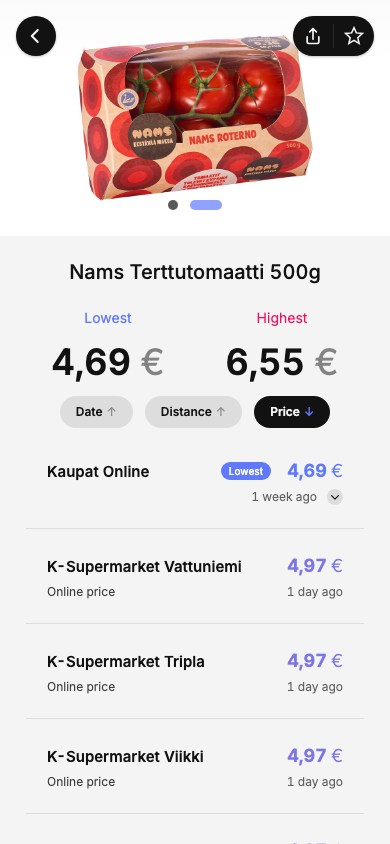
At the low end are standard salad tomatoes, sold as an everyday staple. At the high end are specialty lines such as cherry, cherry pera, and Raf tomatoes, where shoppers are paying for more than weight alone. One concrete reference point in Finland is GTIN 06430064550007, Nams cluster tomato 500g, with a median price of €9.94/kg.
| Product type | Illustrative price | Main value signal |
|---|---|---|
| Salad tomato | €3.20/kg | Commodity volume |
| Cluster tomato | €9.94/kg | Convenience and freshness cue |
| Cherry tomato | €11.80/kg | Sweetness and snackability |
| Cherry pera | €13.60/kg | Shape, texture, flavour |
| Raf tomato | €16.90/kg | Specialty reputation |
Why this happens
Standard salad tomatoes are priced like a commodity: grown at scale, moved efficiently, and judged mainly on availability and acceptable quality. Premium varieties are different. They often have lower yields, tighter growing conditions, more careful handling, and stronger sensory expectations around sweetness, texture, or aroma.
Raf tomatoes from Almería are the clearest example in this story. They carry genuine agricultural distinction, and the flavour difference can be real. But cost is only part of the final shelf price. Once a variety earns status, a marketing premium gets added on top of the production premium.
What it means for you
For sauces, soups, and long cooked dishes, the cheapest solid tomato usually wins on value. After twenty minutes in a pan, much of the subtle flavour advantage disappears, so paying specialty prices often brings little practical benefit.
Premium tomatoes justify themselves when eaten raw. If you are serving slices with olive oil and salt, building a salad, or making a cold plate where the tomato is the point, then the extra spend can make sense. In other words, paying Raf prices for a bolognese is a preference, not a necessity.
Price premium above standard salad tomato — €/kg
Products referenced in this story
Real shelf prices as reported by Sivix contributors. Tap any product to see current prices.
Data source: Based on — price records collected by Sivix users across — markets. Data reflects real shelf prices as reported at time of purchase, —.