

2 July 2026
A Simba New Born Baby doll cost €22.99 in Slovenian supermarkets in summer 2025. By spring 2026, the same doll was €13.79 — down 40% on the shelf. A Home bamboo cutting board went from €13.99 to €9.79 (-30%). A snow shovel fell from €13.59 to €6.80 (-50%). While every food aisle in Slovenia was rising, three whole categories quietly went the other way.
What the data shows
Across 164 paired Slovenian SKUs in three non-food aisles, the median price fell over the same ten months in which food was up 9% on average.
| Category | Median change | Paired SKUs |
|---|---|---|
| Household tools | -15.1% | 36 |
| Writing & drawing | -15.0% | 89 |
| Toys | -11.7% | 39 |
| (Reference: food staples) | +10 to +14% | — |
| (Reference: rice) | +25.1% | 39 |
The falls weren't small. In toys, we measured drops of 30–50% on common SKUs — Dickie toy trucks halved, Steffi dolls halved, Simba New Born Baby down 40%, Bubbletastic bubble planes cut from €3.25 to €1.95. In household tools, Home-brand bamboo cutting boards dropped 25–30%, muffin trays fell by a quarter, and seasonal items (a snow shovel, a BBQ gas-line set) were cut 50% as the season turned. In writing and drawing, the same pattern repeated across pens, notebooks and craft kits.
A Slovenian household buying a kid's birthday present or a new pair of kitchen scissors paid, on average, 10–15% less in spring 2026 than in summer 2025 — for the same product. That happened while their bread rose 6%, their rice rose 25%, and the dishwasher tablets beside the shopping list rose 82%.
Why this happens
Deflation in toys, stationery and hand tools isn't about easing commodity costs. It is structural. These aisles share three features that push prices downward rather than upward:
Clearance cycles. Toys especially follow a sharp Christmas-through-spring cycle. A doll priced at €22.99 on the Christmas shelf is discounted to €13.79 by February, as the store needs the floor space for garden furniture. The median price in our Feb–Apr window lands in the clearance trough.
Model replacement. Pens, notebooks, craft kits and kitchen gadgets are routinely refreshed with "new" packaging, new licensing tie-ins and new colourways. The previous generation gets pushed down in price to clear stock — the new generation takes the shelf at the old price or slightly higher. The "same SKU" comparison we're doing catches only the displaced older stock.
Low repeat-purchase pressure. Nobody buys toys weekly. There's no restocking rhythm pushing the retailer to reset the shelf to list price every Monday. Once a SKU drops on promotion, there's little force pulling it back up. The same retailer that raises bread by 6% because it's a weekly staple can cut toys by 30% because no one's rebuying the doll.
This is retail's quiet counterweight. Food shows inflation because weekly purchases give retailers a reason to protect margins every week. Non-essential, replaceable, clearance-cycle aisles drift downward without the same force pushing back.
What it means for you
If your grocery bill is up and your "stuff" bill is down, both can be true at once. The practical implication: time the non-food purchases. Toys bought in February cost 30–40% less than the same toys in November; kitchen gadgets and cutting boards are cheaper in post-Christmas sales; writing and craft supplies are cheapest in early summer. The shelf is doing opposite things in different aisles, and shoppers who notice keep the difference at both ends — paying less where prices fall and cushioning their exposure where they rise.
Products referenced in this story
Real shelf prices as reported by Sivix contributors. Tap any product to see current prices.
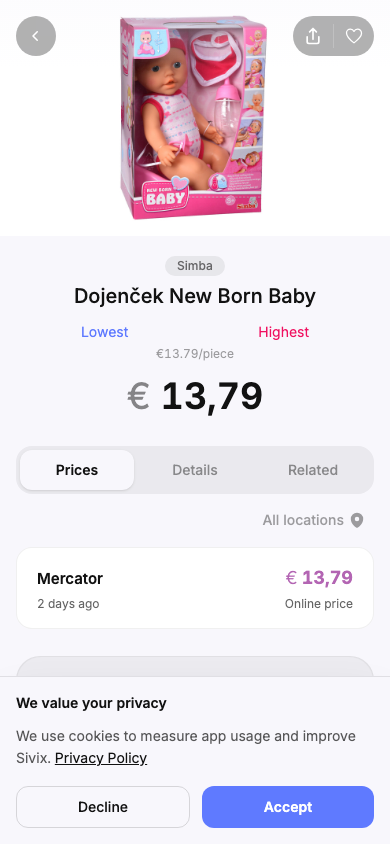
Toy — -40%
Simba New Born Baby doll
SI · View on Sivix →
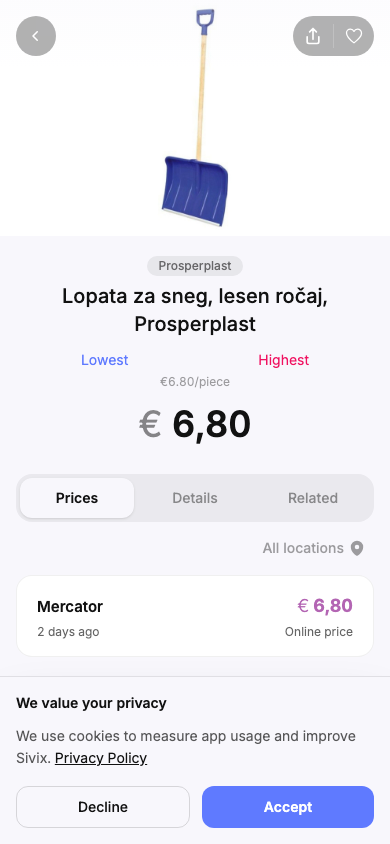
Household tool — -50%
Prosperplast wooden-handle snow shovel
SI · View on Sivix →
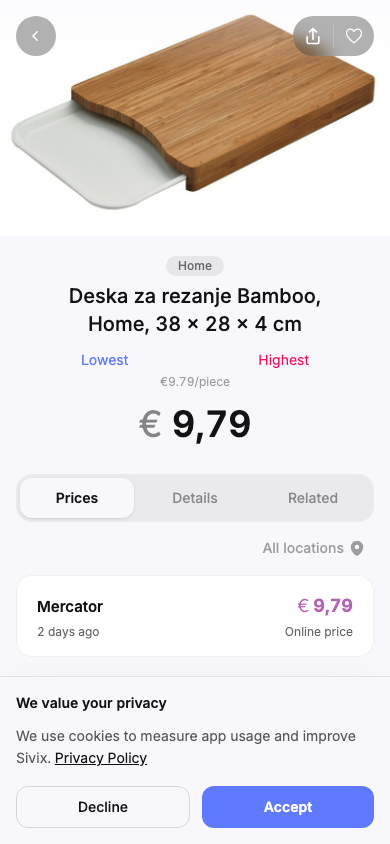
Household tool — -30%
Home bamboo cutting board 38×28 cm
SI · View on Sivix →
- Simba New Born Baby doll SI · €13.79 · -40% →
- Prosperplast wooden-handle snow shovel SI · €6.80 · -50% →
- Home bamboo cutting board 38×28 cm SI · €9.79 · -30% →
- Dickie car-transport truck SI · €4.99 · -50% →
- Dickie rescue-vehicle set SI · €3.99 · -50% →
- Steffi Flower Hair doll SI · €7.49 · -50% →
- SmartGames Squirrels & Acorns puzzle SI · €16.58 · -30% →
- Home 6-muffin baking tin SI · €3.59 · -25% →
Data source: Based on 164 paired Slovenian SKUs in toys (39), writing-and-drawing (89) and household-tools (36), comparing each SKU's median price in June–August 2025 against February–April 2026. Data reflects real shelf prices as reported at time of purchase.