
Skip to content
Sivix
← Data Stories

Slovenia Pays 38% More for Olive Oil Than Croatia

The same Croatian olive oil brand costs €9.99 in Zagreb and €16.17 in Ljubljana — a €6.18 gap on a single bottle.

Price gap
+38%
More per bottle
€6.18
More per year
€148

Median price per litre — Croatia vs Slovenia

Median price per litre — Croatia vs Slovenia
LabelValue
Croatia11.99
Slovenia16.54

Source: Sivix, selected products from the story

Drive 90 minutes south from Ljubljana and olive oil drops €6. Same bottle. Same brand. Made in Croatia. The border does not add anything to the oil — just to the price.

What the data shows

Sivix contributors logged prices across both countries in early 2026. The median price for a 1-litre bottle of olive oil in Croatia is €11.99. In Slovenia, the same format costs €16.54 — a 38% gap between neighbours who share a 670-kilometre border and, apparently, very different ideas about what olive oil should cost.

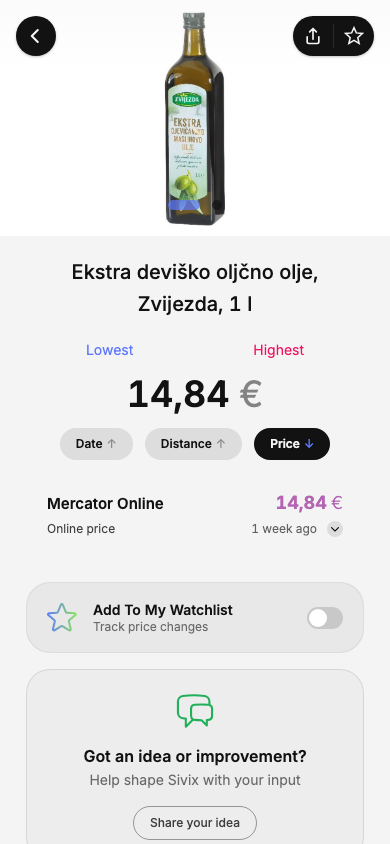
The clearest example is Zvijezda extra virgin, a Croatian brand made in Zagreb. In Croatia: €9.99 a litre. In Slovenia: €16.17. That is €6.18 more per bottle — every bottle, every shop. If your household goes through two bottles a month, that gap costs you €148 a year for the privilege of buying Croatian olive oil in Slovenia rather than in Croatia.

Product Croatia Slovenia
Zvijezda extra virgin 1l€9.99€16.17
Category median 1l€11.99€16.54

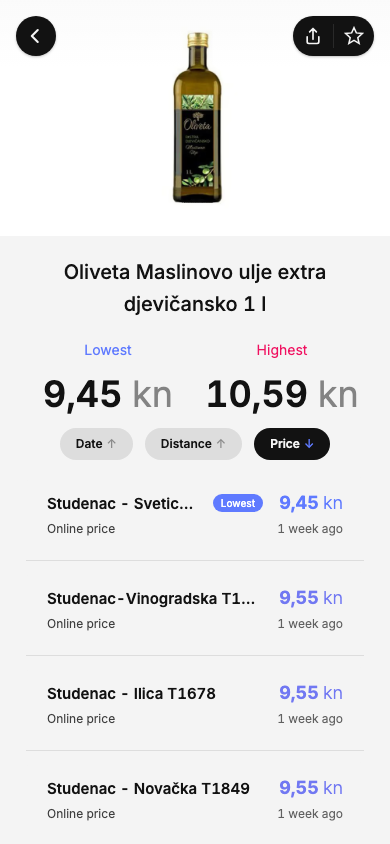
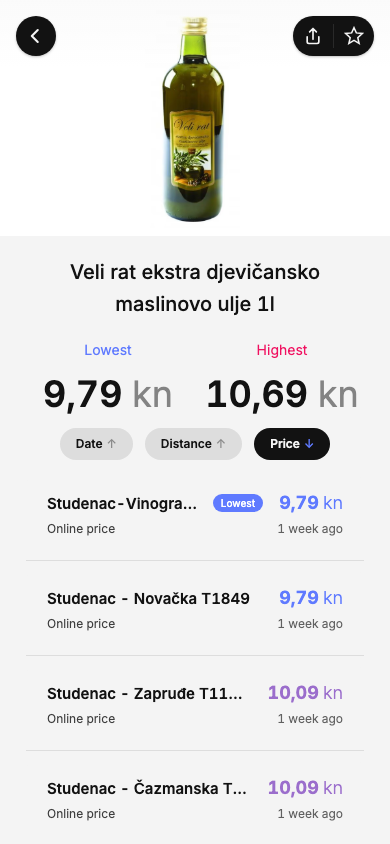
Croatian supermarkets also stock brands that simply do not reach Slovenian shelves. Oliveta extra virgin sells for €9.85 a litre. Veli Rat extra virgin — pressed in Dalmatia — costs €10.29. Solid everyday oils with no import overhead. In Slovenia, oils at that price point do not exist.

Why this happens

Croatia produces olive oil. Slovenia does not. Every bottle on a Slovenian shelf was imported — which means transport, logistics, a distributor margin, and a domestic retail markup on top of all that. The same economics that make French wine cheaper in France apply here, just with fewer cobblestones.

There is also less competition. Croatian supermarkets carry a wide range of domestic producers, which keeps prices honest. Slovenian shelves are dominated by a handful of imported brands with comfortable margins and no domestic challenger to push back.

What it means for you

The gap is structural — it will not disappear. But if you cross into Croatia regularly — for a weekend, a holiday, a day trip — buying two or three bottles while you are there is one of the most straightforward pieces of shopping optimisation available. €9.99 in Rijeka versus €16.17 in Ljubljana: same bottle, €6.18 back in your pocket. Over a year of monthly restocking trips, that is €74 saved. The customs officer will not stop you for a few bottles of oil.

Individual product prices — Croatia vs Slovenia (€/litre)

Individual product prices — Croatia vs Slovenia (€/l)
ProductPrice (EUR)
Oliveta (HR)9.85
Veli Rat (HR)10.29
Zvijezda (HR)9.99
Zvijezda (SI)16.17
Borges (SI)16.24
Gea (SI)16.99

Source: Sivix, HR + SI, early 2026

Products referenced in this story

Real shelf prices as reported by Sivix contributors. Tap any product to see current prices.
Common Questions

What is Sivix?

Sivix is a crowdsourced price network where everyday shoppers scan products and submit real-world prices — building the most accurate, real-time view of what things cost near you.

Is Sivix free to use?

Yes. Scanning products, submitting prices, and browsing the price network are all free — Sivix is built by its community of shoppers.

How do I find the best price?

Scan products and submit accurate prices using the Sivix app. Every validated submission makes the data sharper — giving you and everyone else a clearer picture of where to find the best deals.

How accurate are the prices?

Prices are submitted by real shoppers from real shelves and reflect data from roughly the last 90 days. The more people contribute in your area, the sharper and more current the picture — and historical prices are stored immutably so trends can’t be quietly rewritten.

Does Sivix show online prices too?

Yes, where available. Alongside real in-store prices reported by shoppers, Sivix also gathers online prices in a growing number of countries — so you can compare what a product costs at the shelf versus online and see where it’s actually cheaper.

Which countries and stores does Sivix cover?

Sivix already has data across several European markets — Slovenia, Germany, Finland, Spain and more — and it grows wherever people contribute. You can scan products in any store; coverage follows the community.

Why does price transparency matter?

Transparent prices help consumers compare stores, identify better deals, and understand market pricing dynamics.

Why should I contribute?

Every price you submit makes the network more accurate for everyone. The more you contribute, the better your access to real-time data — and the more you can save. Those who join early and contribute consistently become the most established voices in the network.

Do I get anything for contributing?

Every verified submission earns recognition in the network, and the people who join early and contribute consistently become its most established voices.

About Sivix

Sivix is a crowdsourced price network built by everyday shoppers. Scan products, submit real prices, and help build the most accurate view of what things actually cost. The more people contribute, the sharper the data — and the better deals everyone can find. We're building the most accurate, real-time view of prices in the world. Those who join early and contribute consistently become the most established voices in the network.

Powering a more transparent marketplace, one price at a time.